Profiteroles Cake with Organic Modica Chocolate
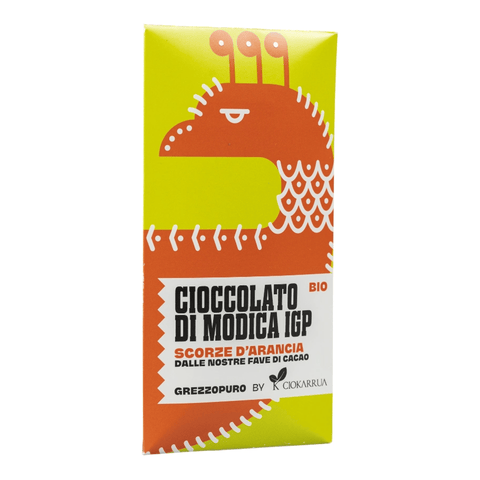
Profiteroles cake with organic Modica chocolate An indulgent cake, covered with choux buns filled with Chantilly cream and glazed with organic Ciokarrua Fior di sale Modica chocolate, with its typical Sicilian aroma and natural taste (from the blog Cuochemabuone). In collaboration with Sicilia in Bio. Ingredients 20 mini choux buns For the Chantilly cream 500 ml cold fresh cream […]

Profiteroles cake with organic Modica chocolate
An indulgent cake, covered with choux buns filled with Chantilly cream and glazed with organic Ciokarrua Fior di sale Modica chocolate, with its typical Sicilian aroma and natural taste (from the blog Cuochemabuone).In collaboration with Sicilia in Bio.
Ingredients
- 20 mini choux buns
For the Chantilly cream
- 500 ml cold fresh cream
- 50 g icing sugar
- ½ vanilla pod
For the chocolate glaze
- 165 g organic Ciokarrua Fior di sale dark chocolate
- 150 ml cold fresh cream
- 23 g sugar
-
Chantilly cream
Start by preparing the cream: whip the cream with an electric mixer or a stand mixer (ideally very cold), as it will be easier to obtain a full-bodied cream.
Work it until you have a semi-whipped mixture. At this point, fold in the vanilla seeds and the sugar. It will be ready when you have a firm, glossy cream. Be careful not to over-whip it, otherwise its texture will become similar to butter. Set it aside in the fridge and prepare the choux buns in the meantime. -
Choux buns – choux pastry
As per the basic recipe (see the Choux pastry – choux buns recipe). As soon as they have completely cooled, you can go ahead and fill them with the whipped cream.
Make a small hole in the base with the back of a teaspoon then, using a piping bag fitted with a nozzle and filled with whipped cream, fill the hole well. Arrange them on a tray and set them aside in the fridge. -
Chocolate glaze
Heat the water, the cream and the sugar in a high-sided saucepan. Bring it just to the boil, then move the saucepan off the heat and add the finely chopped dark chocolate.
Start stirring quickly with a whisk so that all the chocolate melts and you obtain a smooth glaze with no lumps. Wait for it to cool a little, continuing to stir from time to time.
The temperature should be between 30 – 35°C. One way to tell if it is ready is to bring it close to your lips without burning yourself. At this point, transfer the glaze to a bowl and let it cool to room temperature before using it. -
Cocoa sponge sheet – biscuit
Prepare the cocoa sponge sheet using 2 baking trays. Start by preheating the oven to 200°C in conventional mode and, while it comes up to temperature, separate the yolks from the whites. Put the whites in a high-sided bowl. Whisk them to stiff peaks, add the sugar a little at a time and keep whisking until the whites are nice and fluffy.
Take the yolks and add them one at a time. Stir with a whisk, folding from bottom to top. Work this way for each egg added.
Add the sifted flour and stir. Add the sifted cocoa and stir, always with the same movement.
Finally, add the seed oil in two batches. This way you will avoid deflating the mixture. Stir and finish by adding the remaining oil.
Prepare the 30×40 cm trays by lining them with baking paper. To make it stick perfectly and stop it moving during baking, grease it with a little butter.
Pour the mixture over the entire surface of the 2 trays. Level it out with a spatula without pressing too hard. It should be no more than 1 cm thick.
Bake the 2 trays one at a time in conventional mode at 200°C for 10-13 minutes on the middle shelf.
Take out and leave to cool. As soon as they are cold, transfer them, together with the baking paper, onto the work surface. Remove the paper from the edges of the sponge and cover the surface with another sheet of paper, then flip it over. In practice, the baking paper that was previously in contact with the tray under the sponge will now be on top. When finished, remove the paper.
In total you will need 4 circles. Using an 18 cm diameter mould, you will get 2 circles from each tray. -
Cocoa sponge sheet – biscuit [timer minutes=10][/timer]
Prepare the cocoa sponge sheet using 2 baking trays. Start by preheating the oven to 200°C in conventional mode and, while it comes up to temperature, separate the yolks from the whites. Put the whites in a high-sided bowl. Whisk them to stiff peaks, add the sugar a little at a time and keep whisking until the whites are nice and fluffy.
Take the yolks and add them one at a time. Stir with a whisk, folding from bottom to top. Work this way for each egg added.
Add the sifted flour and stir. Add the sifted cocoa and stir, always with the same movement.
Finally, add the seed oil in two batches. This way you will avoid deflating the mixture. Stir and finish by adding the remaining oil.
Prepare the 30×40 cm trays by lining them with baking paper. To make it stick perfectly and stop it moving during baking, grease it with a little butter.
Pour the mixture over the entire surface of the 2 trays. Level it out with a spatula without pressing too hard. It should be no more than 1 cm thick.
Bake the 2 trays one at a time in conventional mode at 200°C for 10-13 minutes on the middle shelf.
Take out and leave to cool. As soon as they are cold, transfer them, together with the baking paper, onto the work surface. Remove the paper from the edges of the sponge and cover the surface with another sheet of paper, then flip it over. In practice, the baking paper that was previously in contact with the tray under the sponge will now be on top. When finished, remove the paper.
In total you will need 4 circles. Using an 18 cm diameter mould, you will get 2 circles from each tray.
Tips
This recipe does not include a soaking syrup for the sponge sheet, but you can use one if you prefer. Mind the quantities, don't overdo it: the layer of sponge sheet is thinner and more delicate than a sponge cake, so you would risk soaking it too much.
As for the whipped cream, there are versions on the market that come close to professional ones. Once whipped, they stay firmer and more stable even after a few days.