Carob pulp flour: healthy, nutritious and versatile. Discover how to use it in the kitchen.
Did you know you can use carob pulp flour for nutritious and delicious sweet and savoury recipes? Its organoleptic qualities and unique flavour make it the perfect ally for a healthy diet and a delightful surprise to experiment with in recipes full of taste. In recent years, pulp flour has been used more and more […]

Did you know you can use carob pulp flour for nutritious and delicious sweet and savoury recipes? Its organoleptic qualities and unique flavour make it the perfect ally for a healthy diet and a delightful surprise to experiment with in recipes full of taste.
In recent years, pulp flour has been used more and more in the kitchen, earning a place of honour thanks to its qualities. Being free from gluten, lactose and added sugar, it is an excellent substitute for ingredients commonly used by those who suffer from food intolerances. But it is good for everyone's health because it is made directly from carob: a superfood rich in fibre, minerals and vitamins.
Consuming carob pulp flour is the perfect choice for anyone who wants to follow a balanced diet, with simple ingredients and a reduced intake of refined flours. A return to olden times, when the priority was to eat nourishing foods from the earth, better suited to the human body.
Healthy choices that involve no sacrifice of flavour! Indeed, carob pulp flour adds taste and character to every recipe.
Let's discover some of its qualities and its endless uses.
From the tree to the kitchen: a source of natural wellbeing
The carob is a majestic evergreen tree that grows naturally in the Sicilian countryside, without chemical intervention. Since ancient times it has given us a 100% organic fruit, which today is used to make, besides flour, many products such as carob bars, spreads and extracts.
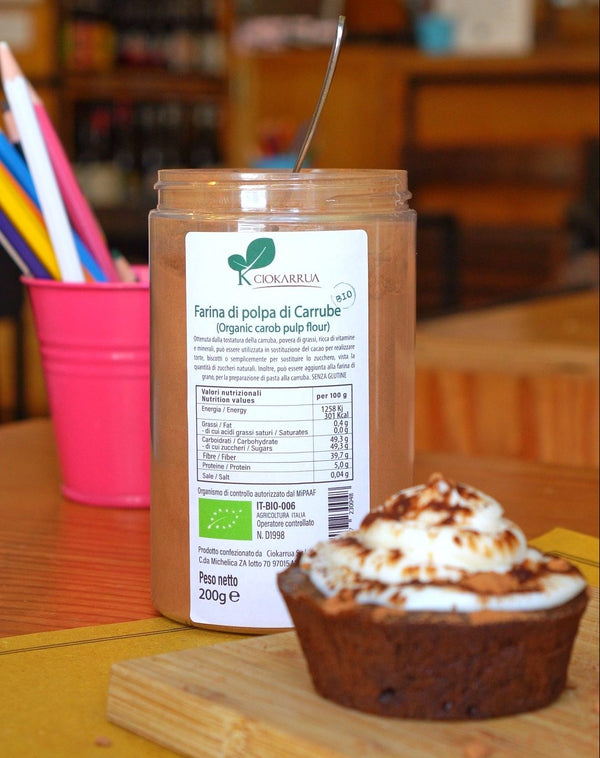
During the production of carob pulp flour, the pods are separated from the seeds. The pulp thus selected is micronised and roasted. The final result? A fragrant, terracotta-coloured powder, naturally sweet and indulgent.
Carob is a concentrate of fibre that helps improve the regularity of our gut. Thanks to this, its flour has great satiating power, and we can use it in a wide variety of recipes to meet our daily energy needs.
A reservoir of calcium, potassium and magnesium, it provides important support for our bones, while the polyphenols it contains have an antioxidant action and counter free radicals.
This protein-rich flour, low in carbohydrates and with a low glycaemic index, should never be missing from our pantry if we want to follow a healthy, tasty and wholesome diet.
Recommended in the diet of diabetics who tolerate fructose reasonably well, and highly suitable for children because it is free from stimulants, it is an excellent alternative to cocoa for wonderfully soft, fragrant cakes.
A treat for our palate
Carob has always been known as the "poor man's chocolate" because of its flavour, very similar to cocoa but sweeter. Thanks to its natural sweetness, with hints of figs and molasses, we can make our recipes perfect even with a reduced amount of refined sugar. What's more, the slightly acidic notes of liquorice balance its flavour, for a taste with truly unique characteristics.
Its unique fragrance wins us over the moment we open the pack of flour: the nostrils are filled with a delicate scent of earth and tradition. For those familiar with these notes, the sensation is of being transported to the Ragusa countryside, among the imposing silhouettes of the carob trees, laden with ripe fruit that fills the jute sacks.
Let's try new and inviting recipes with carob pulp flour
With pulp flour we can create original variations of our favourite dishes. Simply combine it with other flours — durum or soft wheat, buckwheat — to experiment with new dishes. In our hands, a chocolatey dough will come to life, to which we can add water or eggs to reach the right consistency for kneading bread or making fresh pasta.
It will be lovely to surprise our guests with dark-hued tagliatelle served with a handful of freshly chopped parsley and a white meat ragù, or with tuna bottarga and mint. The endless pairing possibilities can tickle the imagination of the boldest cooks for a whole array of first courses with a unique flavour!
Our homemade bread will have something extra: an enticing aroma and flavour. Tasty and fragrant, we can slice it and enjoy it at breakfast spread with an indulgent layer of jam or honey. It is excellent as an accompaniment to flavourful main courses such as caponata and meats. Well worth trying for a tempting aperitivo paired with a Sicilian caponata.
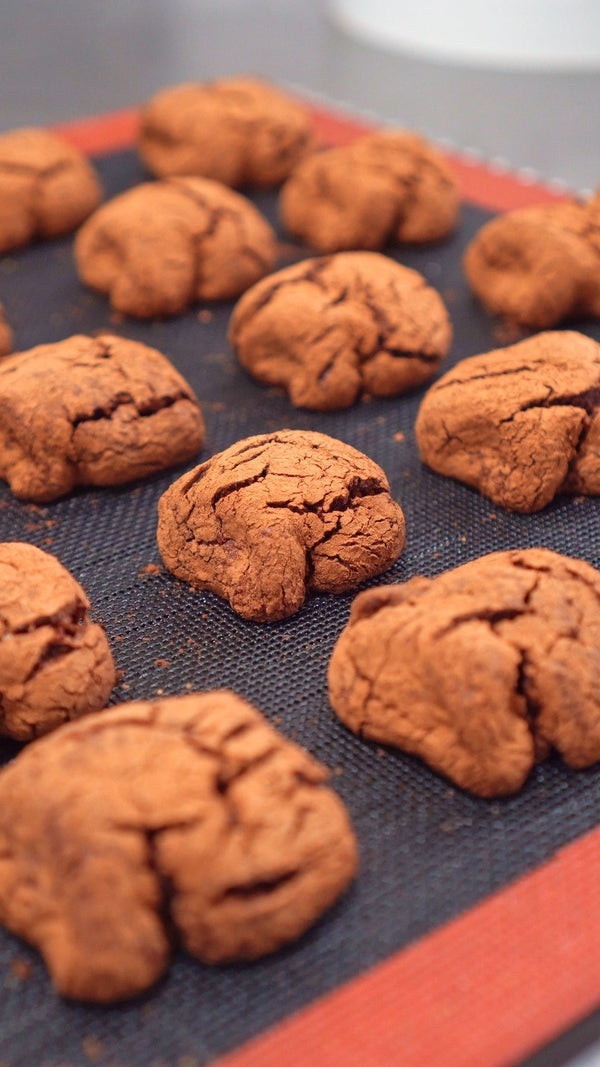
In sweet recipes we can use carob flour as a perfect substitute for cocoa in fluffy cakes, wonderfully soft loaf cakes, indulgent creams, or as a tasty, less calorific variation of butter biscuits, or even dusted over a classic tiramisu. We can combine it with other nut flours, such as hazelnut or almond flour, for unusual and delicious recipes.
With a little imagination and a desire to experiment, we can create original, healthy dishes with a unique flavour!